

A good espresso sale can look exciting for five minutes, then confusing for the next hour. The DeLonghi Magnifica Evo sits in that exact spot because the discount is not only about money. It is about whether a U.S. kitchen can finally get whole-bean drinks without turning the counter into a hobby bench. Recent listings and deal coverage have shown the manual-frother version around $499.95 and the LatteCrema version around $549.95, with older deal coverage calling the $549.95 range a match for its lowest price at the time.
That makes the question less simple than “is it cheap?” A better question is whether this automatic espresso machine removes enough daily friction to earn its space. If you follow consumer deal coverage because you want practical buys instead of loud markdowns, this is the type of appliance worth slowing down for. It can save money for the right household, but it can also become an expensive decoration if your routine does not match what it does best.
Why This Deal Lands at the Right Moment for Home Buyers
Coffee spending has become one of those small leaks people notice only after the month ends. A $6 latte does not feel wild on Tuesday morning. Five of them in a workweek starts to feel different. That is why a sale on a bean-to-cup machine hits harder than a normal kitchen markdown. It points straight at a habit many Americans already have.
The tension is that espresso machines often ask too much from people. Separate grinder. Portafilter. Tamping. Dialing in. Cleaning loose grounds. For some buyers, that ritual is the fun part. For many households, it is the reason the machine ends up beside the toaster, unused and slightly judged.
A sale also lands differently when counter space has become part of the budget. A family in a suburban Atlanta kitchen may have room for a grinder, brewer, frother, and bean jars. A renter in Chicago may have one strip of counter between the sink and the stove. When one appliance replaces several pieces, the discount feels bigger than the sticker shows.
The coffee-shop math is no longer silly
Run the numbers in plain terms. A couple in Phoenix buying four milk drinks a week at a local café can cross $100 a month without adding pastries, tips, or extra shots. That does not mean every machine pays for itself fast. Beans, milk, filters, and descaler still cost money.
Still, the math starts to work when coffee is a routine, not a weekend treat. The sale matters because it brings a full home espresso setup closer to the price of a midrange drip brewer plus a separate burr grinder. That is the non-obvious part. The machine is not competing only with coffee shops. It is also competing with the pile of gear people buy when they try to copy a café at home.
A cheaper pod system can beat it on speed and upfront cost. No argument there. But pods lock you into capsules, and the drink texture is not the same. Whole beans give you more room to adjust flavor, freshness, and roast style. That difference shows up most on simple drinks like espresso over ice or an Americano after lunch.
There is another quiet savings point: fewer impulse trips. A home drink will not replace every café stop, and it does not need to. The win comes when you skip the weak weekday purchase, then keep the Saturday café visit because you enjoy it. That is a healthier target than pretending a machine will end every coffee run.
Convenience matters more than technique for most kitchens
Many reviews of espresso gear talk as if every buyer wants to become a weekend barista. Most do not. They want a drink that tastes good before work while the dog is barking and someone is looking for car keys. That is where this kind of automatic espresso machine earns attention.
The hidden value is not perfection. It is repeatability. Pressing a button and getting a familiar cup can matter more than chasing a flawless shot. That sounds backwards to coffee purists, but it is how real kitchens work. A machine that makes an 8-out-of-10 drink six days a week may beat a manual setup that makes one beautiful drink on Saturday and sits untouched the rest of the time.
For deal hunters reading a kitchen appliance buying guide, the lesson is simple. Do not buy the sale because you like the idea of espresso. Buy it because your mornings already prove you will use it.
The same rule applies to cleanup. If a machine takes less effort after the drink, it has a better chance of staying in the routine. People do not abandon kitchen gear only because the output is bad. They abandon it because the process feels annoying at the exact moment they have the least patience.
What the DeLonghi Magnifica Evo Actually Changes on the Counter
The biggest shift is that grinding, brewing, and cleanup move into one appliance. That sounds small until you live with it. A separate grinder spreads grounds around the counter. A manual machine asks for tamping and knock-box habits. A milk pitcher has to be rinsed before the foam dries. Each step is small. Together, they become the reason people skip the whole process.
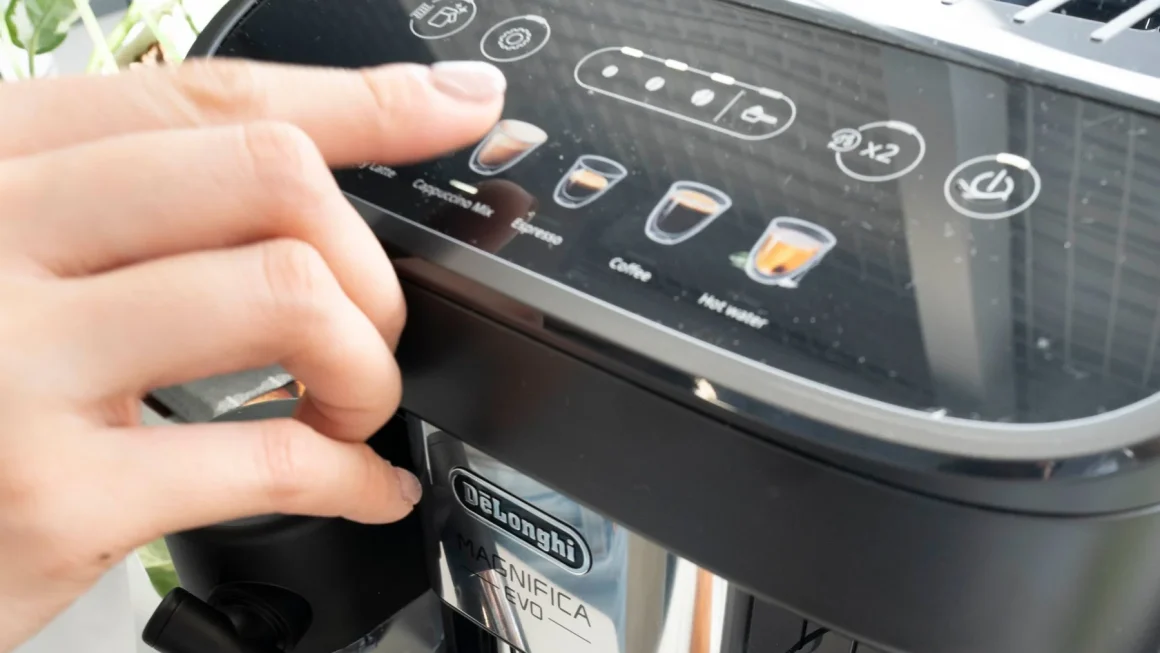
Official and retailer listings point to the same core strengths: a built-in grinder with 13 settings, preset drinks, frothing options, and removable or dishwasher-safe parts on supported pieces. The design is not trying to make you a café technician. It is trying to make the better drink the easier choice.
That matters most in shared homes. One person may want espresso. Another may want iced coffee. Someone else may want hot water for tea and never touch the milk system. A machine with preset paths reduces the small arguments that happen when one appliance only serves the most patient person in the house.
Why the built-in grinder matters more than the touchscreen
A bright control panel sells the machine in photos. The built-in grinder does the real work. Beans lose aroma after grinding, and pre-ground coffee gives you less control over taste. A burr grinder inside the machine means each cup starts closer to fresh, without asking you to buy another countertop tool.
The 13 grind settings are useful, but not because most people will change them every morning. They matter when you switch from a dark grocery-store espresso roast to a lighter local roast from a weekend market. A finer grind may help one bean. A coarser setting may calm another. You are not stuck with one flavor profile forever.
The counterintuitive catch is that more settings do not help if you keep stale beans in the hopper for weeks. A built-in grinder rewards small batches. Fill it with what you will use in a reasonable window, then refill. That little habit can matter more than touching every menu option.
The grinder also changes how you shop for beans. You can buy a local roast from a small U.S. roaster and test it without changing your whole setup. If it tastes sharp, adjust the grind and strength before blaming the beans. That kind of feedback loop makes home coffee feel less random.
The milk system is the real line between models
The model choice becomes more serious if your household drinks cappuccinos, latte macchiatos, or iced milk drinks. Manual frothing costs less and gives more hand control. Automatic milk systems cost more but remove a step many people do badly or avoid.
That is why shoppers should check the exact model code before clicking. The manual-frother version and the LatteCrema version can sit close together in search results while offering a different daily experience. Amazon’s listing for ECAM29043SB showed five one-touch drinks and a manual frother, while nearby auto-frother listings referenced seven recipes and a higher sale price.
Here is the practical read. If you mostly drink black coffee, Americanos, or iced espresso, the lower-priced version may make sense. If your household burns through oat milk lattes, the automatic milk option may be the one that keeps the machine in use. A cheaper machine that you avoid on busy mornings is not cheaper in any meaningful way.
Milk cleaning deserves the same honesty. Automatic milk systems are easier during the drink, but milk parts still need care. That is not a flaw. It is dairy doing what dairy does. The buyer who accepts that small rinse-and-store habit will enjoy the feature more than the buyer who expects it to disappear from the routine.
How to Judge the Sale Before You Add It to Cart
A record-low label can be useful, but it should not do your thinking for you. Retailers change list prices, bundles, and model names. Deal pages also update fast during big sale windows. The better move is to judge the actual version, the real street price, and the parts included in the box.
That sounds boring. It saves regret.
The strongest buyers will compare the sale against three things: their drink habits, their counter space, and their patience for cleaning. Once those are clear, the price becomes easier to read. A full-size appliance is not like a pair of headphones. You have to live with it in the kitchen every day.
It also helps to think like a retailer for a minute. Big sales often place similar products next to each other because the names look close and the prices look dramatic. The shopper who slows down can spot the difference. The shopper who rushes may buy the version that looked like the best deal in a search tile.
Check the exact model before trusting the discount
The words on the box can look almost identical across versions. One listing may mention a manual milk frother. Another may mention an automatic frother. A newer “Next” version may bring a different display and more drink choices. These are not tiny differences when you are spending several hundred dollars.
A real example from recent coverage shows why this matters. In June 2026, one report covered the LatteCrema model at $549.95, down $250, while another covered the newer Next version at $699.95, down $400 and matching its all-time low. Both were strong deals. They were not the same buy.
The non-obvious move is to ignore the biggest dollar-off number at first. A $400 discount on the wrong machine can still be a weaker choice than a smaller discount on the model that fits your routine. Look for the model code, recipe count, frother type, warranty terms, and return window before treating the sale as a win.
Also check what comes in the box. The official U.S. product page lists items such as a filter, scoop, water hardness test, cleaning brush, descaler, manual, and quick-start guide for one version. Those small extras do not make the machine cheap, but they can make setup less irritating on day one.
Look beyond price when replacing a pod machine
Pod drinkers face a different choice. The appeal of this appliance is not that it beats pods on speed. It usually will not. The appeal is better bean choice, less capsule waste, and more control over drink strength. That makes the switch feel less like a gadget upgrade and more like a habit change.
A good home espresso setup should also respect your maintenance tolerance. This machine can form spent pucks and has removable parts, but you still need to empty trays, rinse milk pieces, descale on schedule, and use decent water. For readers who want to understand why consistency affects flavor, the Specialty Coffee Association publishes coffee standards and research used across the industry.
The small maintenance tasks are not deal-breakers. They are the price of leaving capsules behind. If you hate rinsing anything before noon, be honest about that now. A machine that needs modest care will only feel easy if you accept the care as part of the routine.
Flavor expectations need a reset too. A bean-to-cup drink may taste different from a coffee shop latte because cafés use commercial grinders, trained staff, and heavy equipment. That does not make the home drink worse. It makes it yours. Once you find the right beans and milk, consistency becomes the reward.
Who Should Buy Now and Who Should Wait
The strongest case for buying comes from use, not excitement. If you already buy espresso drinks several times a week, the sale is speaking to an existing habit. If you rarely drink coffee at home, it is speaking to a fantasy. Those are different things.
This is where a lot of shoppers get trapped. A markdown makes them imagine a new version of themselves: calmer mornings, better drinks, tidy counters, fewer café receipts. Some of that can happen. But an appliance cannot build a routine from nothing. It can only make an existing routine easier.
The waiting case is not always about money. Sometimes it is about timing. If you are moving soon, remodeling a kitchen, or still deciding between pod, drip, and espresso habits, a sale can create pressure before you have a stable answer. No appliance should force that decision for you.
Daily latte drinkers get the cleanest win
The cleanest buyer is the person who already knows their order. Maybe it is an iced latte before a commute in Dallas. Maybe it is a cappuccino after school drop-off in New Jersey. Maybe it is two Americanos during a work-from-home day in Ohio. The pattern already exists.
For that person, this automatic espresso machine can turn a purchase into a repeatable home habit. It shortens the gap between wanting the drink and making the drink. That gap is where most kitchen gear fails. If a machine makes the desired choice easy, it gets used.
Milk-drink households should lean toward the frother experience that matches their patience. One person may enjoy steaming milk by hand. Another may want a button and a container that goes back in the fridge. Neither choice is morally better. The right one is the one you will use on a rushed Thursday.
There is a social angle too. A machine like this can serve guests without making the host perform. Pressing a preset for a visiting parent or a friend after dinner feels easier than explaining a portafilter routine. For many homes, that ease matters more than barista theater.
Small kitchens and picky drink routines need a second thought
Apartment kitchens need a harder look. This machine may replace a drip brewer, grinder, and milk frother, but it is still a countertop appliance with water access, bean access, and cleaning needs. Measure first. Then measure again with cabinet doors and mug storage in mind.
Picky espresso drinkers should also pause. If you already care about dose, yield, basket style, pressure curves, and hand-textured microfoam, an automatic model may feel too closed off. You may be happier with a separate grinder and a semi-automatic setup, even if it costs more and asks more of you.
That is not an insult to the machine. It is a sharper buying rule. This deal is best for people who want better daily drinks with less mess, not for people who want full control over every variable. A sale can make the price attractive. It cannot change the type of coffee person you are.
Waiting can also be smart if you are unsure about milk drinks. Try tracking your orders for two weeks. If nearly every cup includes milk, the frother version matters. If most cups are black coffee or iced Americano, the simpler version may be enough. Your receipts can answer what the sale page cannot.
Conclusion
A strong espresso deal should make you pause, not panic-buy. The best reason to consider this machine is not the headline discount alone. It is the way it combines grinding, brewing, milk handling, and cleanup into a routine that normal households can repeat. That matters more than a dramatic sale badge.
The DeLonghi Magnifica Evo makes the most sense for U.S. buyers who already spend on café drinks and want a cleaner path to whole-bean coffee at home. It is less convincing for people who only want occasional coffee or who enjoy manual control as part of the hobby. Both groups can be smart. They simply need different tools.
The record-low angle gets attention, but the lasting value comes from fit. Check the model code, compare the frother, read the return terms, and be honest about your mornings. Then buy only if the machine solves a problem you already have. That is how a deal becomes a good decision.
Frequently Asked Questions
How much should I pay for this espresso machine on sale?
A strong sale price depends on the exact model. Recent U.S. listings placed some versions around the $499 to $550 range, while newer or auto-frother versions may cost more. Check the model code, frother type, and seller before judging the discount.
Is an automatic espresso machine worth it for one person?
It can be worth it if you drink espresso, lattes, or Americanos several times a week. One-person households should focus on use frequency and counter space. Occasional coffee drinkers may be better served by a smaller brewer or a simple manual setup.
What is the difference between manual and automatic milk frothing?
Manual frothing gives you more control but asks for more effort and practice. Automatic frothing is easier for busy mornings and shared households. Milk-drink fans usually get more value from the automatic option, while black coffee drinkers may not need it.
Does the built-in grinder replace a separate burr grinder?
For most daily users, yes. A built-in grinder saves space and grinds fresh for each drink. Serious espresso hobbyists may still prefer a separate grinder because it gives more control, easier upgrades, and finer adjustment for different beans.
Can this machine make iced coffee drinks?
Some versions include iced coffee presets or settings designed for stronger extraction over ice. That helps the drink hold flavor after melting begins. Check the drink menu on the exact model because recipe counts can change between versions.
Is this a good upgrade from a pod coffee machine?
It is a good upgrade if you want whole beans, more drink control, and fewer capsules. It may not feel as fast as pods. The trade is better coffee flexibility in exchange for more cleaning and a higher upfront price.
What should I check before buying during a record-low sale?
Check the model number, frother type, recipe count, warranty, return window, and whether the seller is authorized. Also compare the sale price against recent deal coverage. A big percentage off means less if the listed model is not the one you want.
How much maintenance does a bean-to-cup machine need?
Expect to empty grounds, rinse removable parts, clean milk components, refill water, and descale when prompted. The work is not hard, but it is regular. Buyers who follow the cleaning routine usually get better taste and fewer machine headaches.