

A discount on older cycling tech only matters when the device still solves a fresh problem for riders. The ELEMNT Bolt V2 sits in that rare spot where the price can fall, yet the core job still feels current: clear ride data, dependable route guidance, sensor pairing, and less phone drama on long miles. For U.S. cyclists watching summer sales, training upgrades, and last-season gear, this GPS bike computer deserves a closer look before it disappears into the used-market pile.
That does not mean every rider should buy it. Wahoo now sells the newer Bolt 3, and the spec sheet has moved forward. But a lower price changes the question. You are no longer asking, “Is this the newest?” You are asking, “Does this still cover my rides better than my phone or a cheap screen?” Shoppers who follow broader retail timing through consumer deal coverage know that older premium gear often becomes most tempting when the replacement model has already landed.
For many riders, that is exactly what makes this cycling computer deal interesting.
Why ELEMNT Bolt V2 Makes Sense at a Better Price
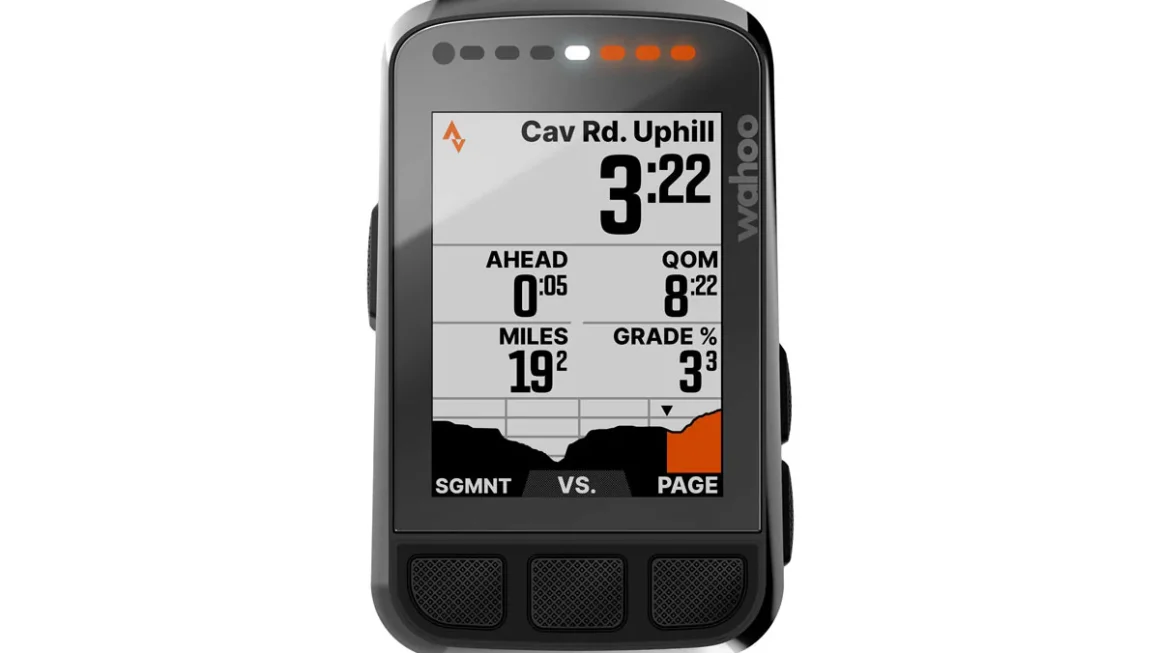
The strongest case for this Wahoo unit is not nostalgia. It is restraint. A good bike navigation device should stay readable, pair with your sensors, hold a route, and avoid turning every ride into a touchscreen fight. The 2021 color-screen model still checks those boxes in a form that suits road bikes, fitness bikes, and fast commuter setups. Wahoo’s own product information lists the unit with a 2.2-inch color screen, 16GB of storage, USB-C charging, multi-satellite support, and up to 15 hours of battery life.
What U.S. riders actually gain from the compact build
A compact cycling computer sounds like a minor thing until you ride with one for a full season. On a crowded handlebar, space matters. A front light, bell, phone bag, aero bar, or radar remote can make a cockpit messy fast. The smaller Wahoo body keeps the screen where you need it without making the bike look like a dashboard.
That matters for weekend riders in places like Austin, Boulder, San Diego, and suburban New Jersey, where one ride may move from bike lane to shoulder to park path. You glance down for speed, next turn, heart rate, or distance. You do not want a tablet bolted to the stem.
The non-obvious upside is that a smaller screen can make you ride better. A huge display invites fiddling. A tight display forces the useful stuff to the front. Speed, distance, route, grade, power, and time are enough for most rides. More data can become noise.
When an older Wahoo computer beats a phone mount
Phones are better than ever, but they are still not ideal bike computers. Bright sunlight drains batteries. Navigation apps compete with texts, music, calls, and background updates. A phone also costs more to replace when a pothole shakes it loose on a rough chip-seal road.
A dedicated GPS bike computer gives you a cleaner job split. The phone can stay in a jersey pocket or saddle bag. The Wahoo screen handles the ride. That is a calmer setup, especially when you are 30 miles from home and clouds are rolling in.
This is where a lower price matters. A rider who would never pay top dollar for a dedicated head unit may see the value once the cost lands closer to accessories than flagship electronics. Pair it with smart bike accessories for everyday riders, and the whole setup starts to feel practical instead of fancy.
Price Pressure Comes From the Newer Wahoo Line
The deal story exists because Wahoo moved forward. The Bolt 3 brings a newer display, better storage, more battery life, and updated GPS hardware. Wahoo says the newer model has a 2.3-inch high-resolution display, 32GB of storage, dual-band GPS, and up to 25 hours of battery life in its FAQ, though battery life can change with settings and sensors. That makes the older unit less exciting on paper. It also makes it easier to discount.
The newer model changed the value math
When a newer model arrives, shoppers often make one mistake. They compare old versus new as if price does not exist. That works for racers, gear testers, and riders who want the best spec available. It does not work for everyone else.
A rider training for a first century in Ohio does not always need dual-band GPS. A commuter in Portland may care more about quick startup, rain resistance, and a readable screen. A weekend gravel rider in North Carolina may need route prompts and battery confidence, not the newest interface.
That is why the older Wahoo unit is still part of the conversation. It may lose the spec fight and still win the value fight. If the discount is strong enough, “not the newest” becomes a feature, not a flaw. You pay for the ride tools you will use, not the ones that sound good in a product launch.
Why the launch price still matters for deal hunters
The original pricing gives the discount some context. When this model arrived, DC Rainmaker covered it as a smaller, lower-priced sibling to Wahoo’s larger ROAM, noting a $279 U.S. price at launch compared with the ROAM’s $379 price at that time. That history matters because it shows where the product sat in the market before the newer generation pushed it down the ladder.
Bicycling later highlighted a Prime Day offer that put the older model under $240 and described the newer Bolt 3 as carrying a $350 price tag at that time. Prices move, and retailers change stock fast, so the smartest approach is to judge the deal against both the launch price and the current newer model.
Here is the simple test: if the discount is small, buy newer. If the gap is wide, the older unit starts to look sharp. That is the whole tension behind this best cycling tech deals moment.
Navigation, Training, and Battery Life in Real Riding
Specs matter, but ride feel matters more. A cycling computer deal is only good if the device can handle the boring parts of a ride without drama. The Wahoo unit was built for that kind of work: route loading, turn prompts, sensor data, workout screens, and post-ride syncing. It is not trying to replace your phone. It is trying to keep your ride from depending on it.
How maps feel on local roads and gravel loops
A good bike navigation device earns trust slowly. It earns it when the route bends through a neighborhood you do not know. It earns it when the group ride splits and you need to find the coffee stop. It earns it when a gravel loop in Kansas or Vermont has one unsigned turn that looks like a driveway.
Wahoo’s support page lists on-device smart navigation features such as saved locations, route-to-start, back-on-track, and retrace ride options. Those features are not glamorous, but they are the tools riders reach for when plans change.
The counterintuitive part is that navigation does not need to feel rich to feel safe. You do not need satellite imagery or a glowing city map. You need a clear line, a readable turn, and enough confidence to keep pedaling instead of stopping every mile.
Where the 15-hour rating still fits
Battery life is where the old-versus-new debate gets louder. The newer model lasts longer on paper. No argument there. But up to 15 hours still covers most American cycling habits: morning training rides, Saturday group rides, charity events, commutes, and plenty of gravel outings.
A 45-mile ride before work does not test that limit. Neither does a weekend loop with two cafe stops. Even a slow century can fit, depending on settings and sensor use. The rider who needs more is usually easy to spot: bikepacker, ultra-distance racer, randonneur, or someone who hates charging gear.
For the rest, battery anxiety often comes from phones, not head units. A phone running maps at full brightness can burn through charge fast. A dedicated GPS bike computer spreads that load better. The practical win is not only runtime. It is keeping your phone alive for photos, calls, emergencies, and the post-ride burrito search.
Who Should Buy, Skip, or Wait for Another Drop
The right buyer is not hard to define. This Wahoo model fits riders who want serious ride data without paying flagship money. It also fits people who want to stop using a phone as the main screen. The wrong buyer is the rider chasing the newest hardware, longest battery life, or sharpest display. A discount should never talk you into the wrong product.
Best fit for commuters, weekend riders, and road cyclists
The best fit is the rider who already knows the limits of phone navigation. Maybe your phone overheats in July. Maybe your handlebar mount slips. Maybe you ride with gloves and hate tapping a wet screen. A dedicated unit solves those annoyances in a plain way.
Road cyclists also get a clean setup for speed, cadence, heart rate, and power. Fitness riders get structure without needing a full training lab. Commuters get a screen that can stay mounted without making the whole bike feel overbuilt.
There is also a gift angle. For someone getting deeper into cycling, a discounted premium head unit can feel more useful than another jersey or multi-tool. It changes how the bike gets used. That is a better gift than a gadget that lives in a drawer.
Red flags before you click checkout
Do not buy only because the word “deal” is attached to it. First, check whether the listing is new, used, refurbished, or from a third-party seller. Then check the return window. Older electronics can be a smart buy, but weak return terms make any discount feel risky.
Also confirm the included mount and charging cable. Wahoo’s product information lists an integrated out-front mount, stem mount with zip ties, and a USB-A to USB-C charging cable in the box for the 2021 model. If a retailer or resale listing excludes those, the price should reflect it.
The last red flag is your own riding style. If you regularly ride all day, travel with loaded bags, or train with the newest routing tools, the newer Wahoo may be worth the extra money. Saving cash feels good for one day. Buying the right tool feels good for years.
Conclusion
The best gear deals are rarely about chasing the lowest number on a product page. They are about timing, use, and fit. This Wahoo computer is not the newest option in the lineup, and that is the point. Once newer hardware takes the spotlight, older premium gear can slide into a friendlier price range while still doing the ride-day work most cyclists need.
For U.S. riders who want clean data, route guidance, sensor pairing, and less phone dependence, the ELEMNT Bolt V2 still has a strong case when the discount is meaningful. The key is to compare it against the newer model, the condition of the listing, and the rides you actually do.
Buy it when the price gap is wide and the seller terms are clean. Skip it when the discount is thin or your rides demand longer battery life. A smart cycling upgrade should make the next ride simpler, not the buying decision messier.
Frequently Asked Questions
Is the Wahoo Bolt still worth buying at a discount?
Yes, when the price is clearly lower than the newer model and the listing includes normal return protection. It still suits riders who want route guidance, sensor data, and a cleaner cockpit than a phone mount can offer.
How much should I pay for an older Wahoo cycling computer?
Judge the price against the newer Bolt model, not only against the original retail price. A small discount may not be enough. A larger drop can make the older unit a strong buy for casual, fitness, and road riders.
Is a GPS bike computer better than using my phone?
Yes, for many rides. A dedicated unit saves phone battery, stays easier to read in sunlight, and keeps ride data separate from calls, texts, and apps. Phones still work, but they are less calm on longer rides.
Does this Wahoo model support turn-by-turn navigation?
Yes, it supports route guidance and several on-device navigation tools. For best results, load routes before the ride and test the setup close to home before using it on an unfamiliar event or gravel route.
Who should skip this cycling computer deal?
Skip it if you need the longest battery life, newest GPS hardware, or the sharpest screen Wahoo sells. Bikepackers, ultra-distance riders, and tech-focused racers may be happier paying more for the newer model.
Can beginners use a Wahoo bike navigation device?
Yes. Beginners may need one or two setup rides to learn the app, data pages, and route loading. After that, the device can make riding feel simpler because the phone stays tucked away.
What should I check before buying from a sale listing?
Check condition, seller rating, return window, included mounts, charging cable, and whether the product is new or refurbished. A missing mount or weak return policy can erase the value of a lower price.
Is the newer Wahoo Bolt worth extra money?
It can be worth it for riders who want more battery life, newer display tech, more storage, and updated GPS features. For shorter rides and everyday training, the older discounted model may cover enough of the same real-world needs.